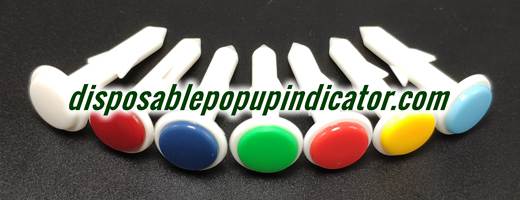
Why Retail Food Brands Add Disposable Temperature Indicators to Their Products
Why Retail Food Brands Add Disposable Temperature Indicators to Their Products
In today's competitive food market, product differentiation has become increasingly important. Food brands are not only competing on taste and price, but also on convenience, consumer confidence, and product experience.
One solution that helps food companies create additional value is the use of disposable temperature indicators integrated into food products.
From poultry packages to ready-to-cook meals, temperature indication technology provides consumers with a simple visual reference while helping brands create more user-friendly products.
Beyond Traditional Food Packaging
Traditional food packaging mainly focuses on protection, transportation, and product information. However, modern food brands are increasingly exploring packaging features that improve consumer interaction.
A disposable temperature indicator can transform ordinary packaging into a more informative product experience.
Instead of relying only on cooking instructions, consumers can receive a direct indication related to the cooking process.
Why Food Brands Consider Disposable Temperature Indicators
For retail food companies, adding a temperature indication feature can provide several advantages.
- Improved consumer confidence
- Enhanced product convenience
- Stronger product differentiation
- Additional value for premium food products
These benefits are especially important in competitive categories such as poultry, meat, and ready-to-cook foods.
Applications in Poultry and Meat Products
Poultry and meat products are common applications for disposable temperature indicators because consumers often want clear guidance during cooking.
Typical applications include:
- Whole turkey products
- Whole chicken products
- Premium meat packages
- Holiday cooking products
- Prepared roasting products
A poultry temperature indicator or disposable meat thermometer can become part of the overall product experience.
The Role of Single Use Food Temperature Indicators
A single use food temperature indicator is designed for convenience and simplicity.
Unlike reusable measuring devices, disposable solutions are integrated into the product and used for a specific cooking application.
This makes them suitable for:
- Retail food products
- Consumer cooking solutions
- Private label programs
- Special promotional products
Creating More Consumer-Friendly Food Products
Consumers increasingly value products that reduce uncertainty.
Cooking instructions can sometimes be difficult for inexperienced users to follow, especially with larger poultry and meat products.
A visible temperature indication solution can provide an easier way for consumers to understand cooking progress.
How Food Brands Select the Right Temperature Indicator
When selecting a supplier, food brands usually consider several factors.
- Temperature activation requirements
- Product compatibility
- Food-grade materials
- Packaging integration
- Supplier production capability
Why OEM Capability Matters for Retail Brands
Retail brands often require products that match their own market positioning.
An OEM disposable temperature indicator supplier can support customized requirements such as:
- Custom activation temperatures
- Private label packaging
- Retail-ready packaging formats
- Bulk production programs
This flexibility allows brands to create unique product offerings instead of using standard solutions.
Temperature Indicators and Food Safety Communication
Food safety is an important consideration for consumers and manufacturers.
A food safety temperature indicator can help communicate cooking progress in a simple and visible way.
For food companies, this provides an opportunity to improve customer guidance while maintaining product convenience.
Why Packaging Companies and Food Manufacturers Work with Specialized Suppliers
Disposable temperature indicators are specialized components that require consistent manufacturing knowledge.
A professional food temperature indicator manufacturer understands:
- Food application requirements
- Temperature response performance
- OEM production processes
- International customer expectations
Bulk Supply for Large Food Programs
Large retailers and food manufacturers often require reliable supply programs.
A bulk disposable temperature indicator supplier should be able to provide:
- Stable production capacity
- Consistent product specifications
- Export support
- Long-term supply planning
Frequently Asked Questions
Why do food brands use disposable temperature indicators?
Food brands use them to improve product convenience, consumer confidence, and product differentiation.
Are disposable temperature indicators used in retail products?
Yes. They are commonly used in poultry, meat, roasting, and ready-to-cook food products.
What is a meat packaging temperature indicator?
A meat packaging temperature indicator is a temperature indication product designed to be included with packaged meat products.
Can supermarkets use private label temperature indicators?
Yes. Retail brands can use OEM solutions with customized packaging and specifications.
What is the difference between a disposable cooking thermometer and a reusable thermometer?
A disposable cooking thermometer is designed for single-use applications, while reusable thermometers are designed for repeated measurements.
Why do companies choose direct manufacturers?
Direct manufacturers can provide better communication, customization support, and stable supply for long-term programs.
DISCLAIMER
"Pop-Up Timer", "Disposable Temperature Indicator", "Single Use Food Temperature Indicator", "Food Temperature Indicator", "Meat Temperature Indicator", and related expressions are generic industry terms used to describe disposable food temperature indication products. We are an independent China-based direct-source manufacturer specializing in disposable pop-up timers and temperature indicator solutions. We are not affiliated with any other brands or companies. Any product names or industry terminology mentioned are used only for general identification and comparison purposes.