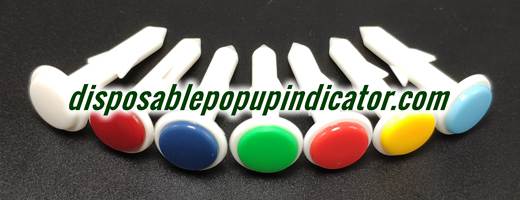
Food-Grade Materials and Quality Standards Behind Disposable Temperature Indicators
Food-Grade Materials and Quality Standards Behind Disposable Temperature Indicators
When food companies purchase disposable temperature indicators, product appearance is only one part of the evaluation process. Professional buyers also need to understand the materials, manufacturing controls, and quality standards behind the product.
A reliable disposable temperature indicator is not simply a plastic component with a temperature response function. It is a carefully designed food application product that requires suitable materials, controlled manufacturing processes, and consistent quality inspection.
For poultry processors, meat manufacturers, frozen food companies, and private label brands, understanding these factors helps them select more reliable suppliers.
Why Food-Grade Materials Are Important
Products used in food applications must consider safety, stability, and compatibility throughout the entire production and usage process.
A professional food temperature indicator manufacturer carefully selects materials based on:
- Food application requirements
- Material stability
- Production consistency
- Long-term product reliability
Material selection is one of the foundations of disposable temperature indicator performance.
Main Materials Used in Disposable Temperature Indicators
Disposable temperature indicators usually contain several functional components that work together.
Typical components include:
- Food-grade plastic housing
- Temperature sensing element
- Precision metal spring mechanism
- Indicator structure
Each component contributes to the overall performance and reliability of the final product.
Food-Grade Plastic Components
The external housing protects the internal mechanism and provides structural support during food preparation.
Professional manufacturers commonly use food-grade plastic materials selected for:
- Durability
- Temperature resistance
- Food contact suitability
- Manufacturing consistency
The quality of the housing directly affects product stability during storage, transportation, and use.
The Importance of the Temperature Sensing System
The sensing system is the core functional part of a disposable temperature indicator.
Its purpose is to respond at a designed activation temperature and provide a visible indication.
Reliable performance depends on:
- Accurate material formulation
- Controlled production conditions
- Consistent assembly
- Temperature verification
Quality Control During Manufacturing
Large commercial buyers require confidence that every production batch performs consistently.
A professional disposable temperature indicator manufacturer implements quality control throughout the manufacturing process.
Typical quality control steps include:
- Incoming material inspection
- Component verification
- Assembly control
- Activation temperature testing
- Final product inspection
Why Accuracy Matters for Food Applications
Temperature indication products must provide reliable activation performance for their intended applications.
For commercial food companies, consistent temperature response helps maintain product quality and customer expectations.
This is why buyers often evaluate:
- Temperature accuracy
- Batch consistency
- Manufacturing capability
- Supplier experience
Food Safety Temperature Indicator Applications
A food safety temperature indicator is commonly considered for products where cooking guidance and temperature awareness are important.
Common applications include:
- Poultry products
- Turkey roasting products
- Chicken products
- Meat packaging solutions
- Ready-to-cook meals
These applications require products designed specifically for food environments.
Why Buyers Prefer Specialized Manufacturers
Disposable temperature indicators are specialized products that require dedicated production knowledge.
A single use temperature indicator factory understands the relationship between:
- Material selection
- Temperature response technology
- Production processes
- Customer application requirements
Specialization helps manufacturers provide more consistent solutions.
OEM Quality Requirements for Food Brands
Many food companies require customized products for their own markets.
An OEM disposable temperature indicator supplier may support:
- Custom activation temperatures
- Customized packaging
- Private label programs
- Bulk production requirements
OEM capability allows brands to develop solutions aligned with their product strategies.
How Buyers Evaluate Product Safety and Reliability
Professional buyers usually review multiple factors before selecting a supplier.
- Manufacturing history
- Material information
- Quality control systems
- Production capability
- Export experience
A transparent supplier relationship helps companies make better purchasing decisions.
The Future of Disposable Temperature Indicator Technology
As food products become more convenient and consumer-focused, temperature indication technology continues to support product innovation.
Future development will continue focusing on:
- Improved customization
- Better packaging integration
- More application-specific solutions
- Higher manufacturing consistency
For food companies, reliable temperature indication solutions can become an important part of modern product development.
Frequently Asked Questions
Are disposable temperature indicators food safe?
Professional disposable temperature indicators designed for food applications use materials selected for food-related requirements and are manufactured under controlled processes.
What materials are used in disposable temperature indicators?
They typically include food-grade plastic components, temperature sensing materials, and precision mechanical parts.
Why is quality control important for temperature indicators?
Quality control helps ensure consistent activation performance and reliable product quality across production batches.
What is a single use temperature indicator factory?
It is a manufacturing facility specializing in producing disposable temperature indication products for food and related industries.
Can food brands request customized temperature indicators?
Yes. OEM suppliers can provide customized specifications, packaging, and production solutions.
What should companies consider when selecting a supplier?
Companies should evaluate materials, quality systems, manufacturing experience, customization capability, and supply reliability.
DISCLAIMER
"Pop-Up Timer", "Disposable Temperature Indicator", "Single Use Food Temperature Indicator", "Food Temperature Indicator", "Food Safety Temperature Indicator", and related expressions are generic industry terms used to describe disposable food temperature indication products. We are an independent China-based direct-source manufacturer specializing in disposable pop-up timers and temperature indicator solutions. We are not affiliated with any other brands or companies. Any product names or industry terminology mentioned are used only for general identification and comparison purposes.